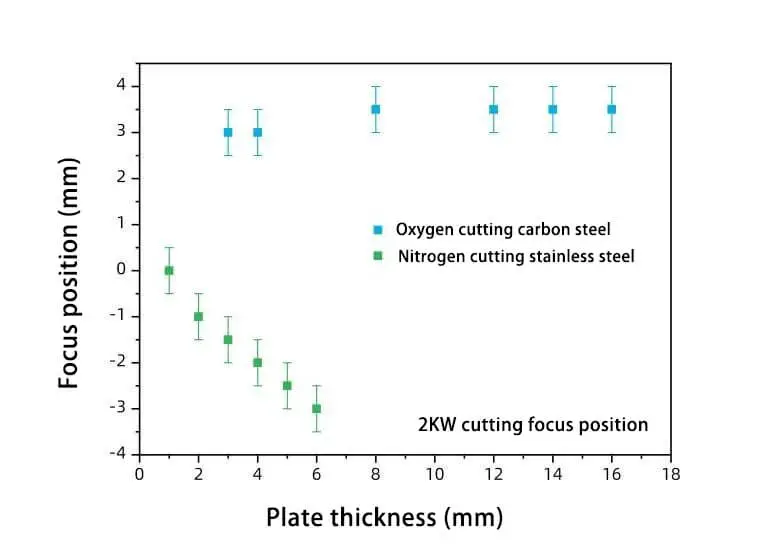
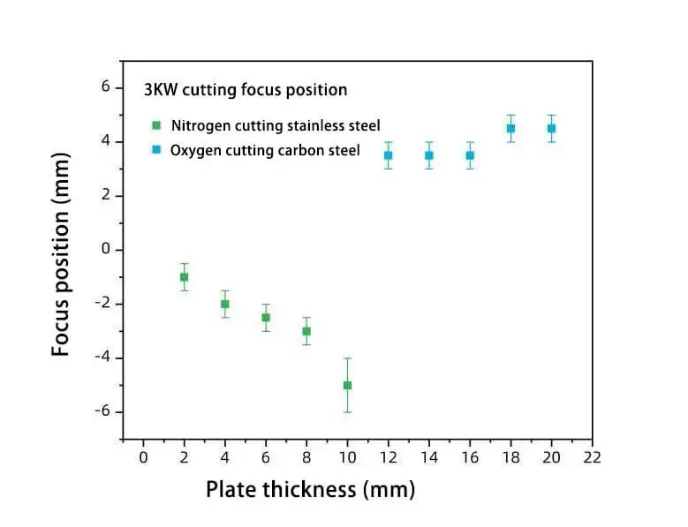
What focus position means
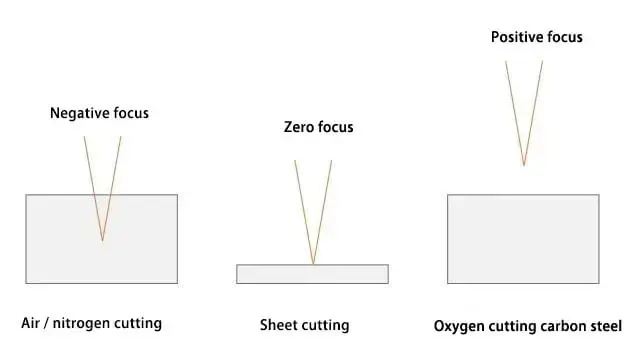
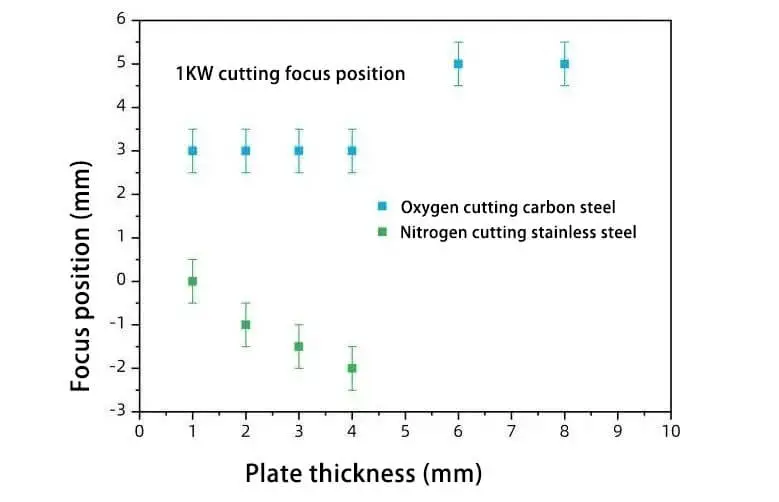
The focus position describes where the focused beam is located relative to the workpiece surface. Changing it can affect kerf, taper, edge condition and whether the material cuts through. The best setting depends on the laser head, optics, material, thickness, assist gas and process recipe.
Focus offset is not the same as cutting height
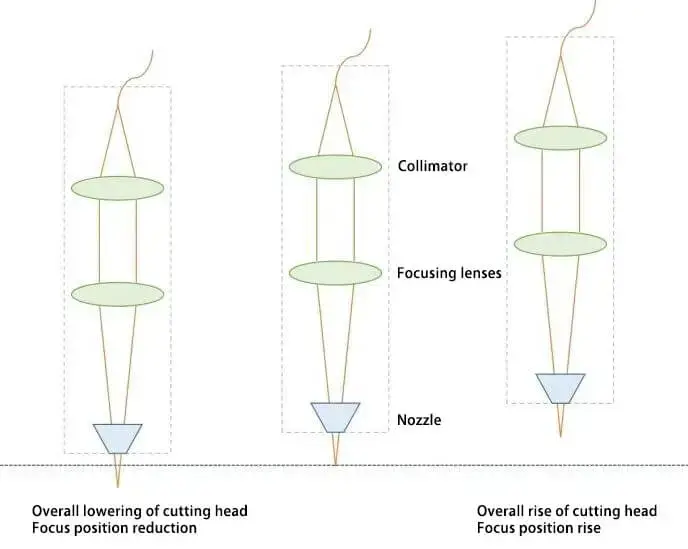
The nozzle-to-sheet distance and the beam focus offset are related to the cutting setup but are not interchangeable controls on every machine. Some heads move an internal lens for autofocus; the Z axis may separately control the head’s distance from the sheet. The effect of raising or lowering the head depends on the machine design and calibration.
Manual and automatic focus adjustment
Some cutting heads use manual adjustment, while others move an internal lens with a motor for autofocus. Use the method and scale specified for the exact head. Do not assume a scale mark of zero is the true optical focus or that the same offset range applies to every machine.
Find a reference through controlled tests
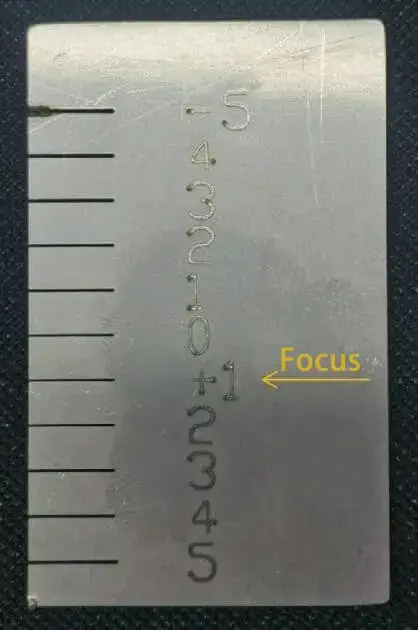
Start from the approved process chart for the material and thickness. If adjustment is allowed, make controlled test cuts and change one permitted value at a time. Compare the top and bottom edge, taper, dross and cut-through, and record the settings that produce repeatable results. Do not copy a test range or step size from a different head or laser power.
Photo suggestion
Show a labeled test coupon with its material, thickness, head model and focus offset. A comparison of the top and bottom edges is more useful than an unlabeled close-up.