Start with the exact material and approved recipe
Record the stainless grade, thickness, surface finish and protective film, then select the process chart for the specific laser source, cutting head and assist gas. Settings from another machine or a different thickness are not a reliable baseline.
Check the sheet and workholding
Confirm the sheet is flat, clean and supported, and that the protective film is suitable for laser processing. Poor contact, warping, surface contamination or a loose sheet can affect height sensing and cut consistency.
Inspect consumables and the cutting head
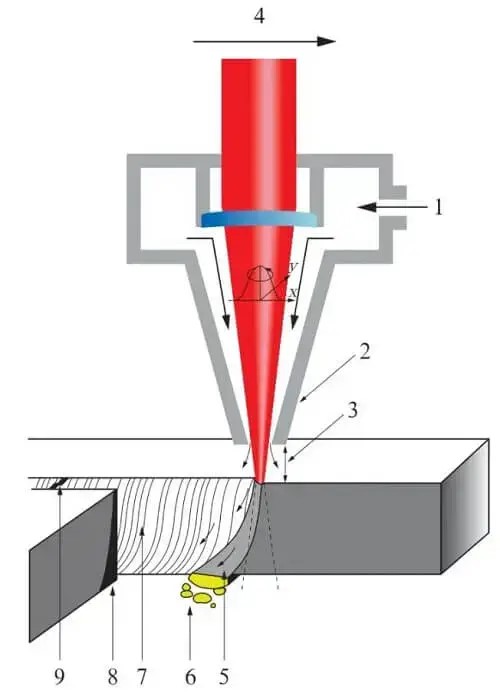
Check the nozzle for wear, damage, debris and correct seating. Verify centering only with the approved procedure. Inspect the protective window as specified by the head maker; do not open optical assemblies or touch optics unless qualified and authorized.
Verify assist gas and height control
Confirm gas type, supply condition and pressure using the machine’s approved chart. Check that the capacitive height sensing and calibration are working as specified. Do not increase pressure or change gas purity by guesswork.
Adjust the process in a controlled way
If the cut is unstable, change one approved process variable at a time and make a controlled test on the same material and thickness. Record the setting and result. Avoid copying universal focus, speed, power or nozzle values from online examples.
Read the cut edge and escalate when needed
Look for repeatable signs such as dross, roughness, incomplete cut-through or inconsistent kerf, then compare them with the machine maker’s troubleshooting guide. Stop and involve a qualified technician if the issue suggests optical damage, a gas fault, collision or abnormal machine motion.