Capture emissions close to where they form
Laser cutting can release fumes and fine particles. A suitable extraction design captures them near the cutting zone, conveys them safely and treats the exhaust using equipment selected for the material and machine. General room ventilation alone may not control emissions at the source.
Dry extraction and filtration
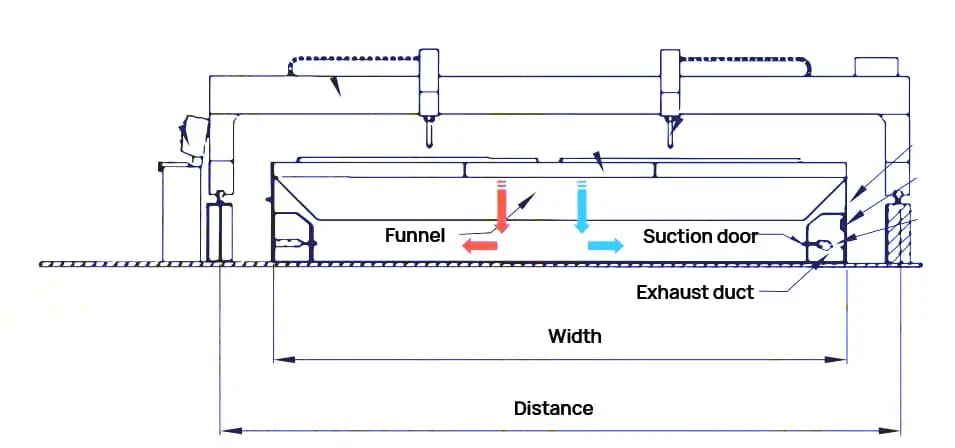
Dry systems commonly use a cutting bed or enclosure connected to ducting and a dust collector. A fan, filter stages and extraction points are selected for the machine layout and expected dust load. The collector and exhaust must be designed, installed and maintained according to the equipment maker and applicable workplace and environmental rules.
Zoned extraction can focus airflow
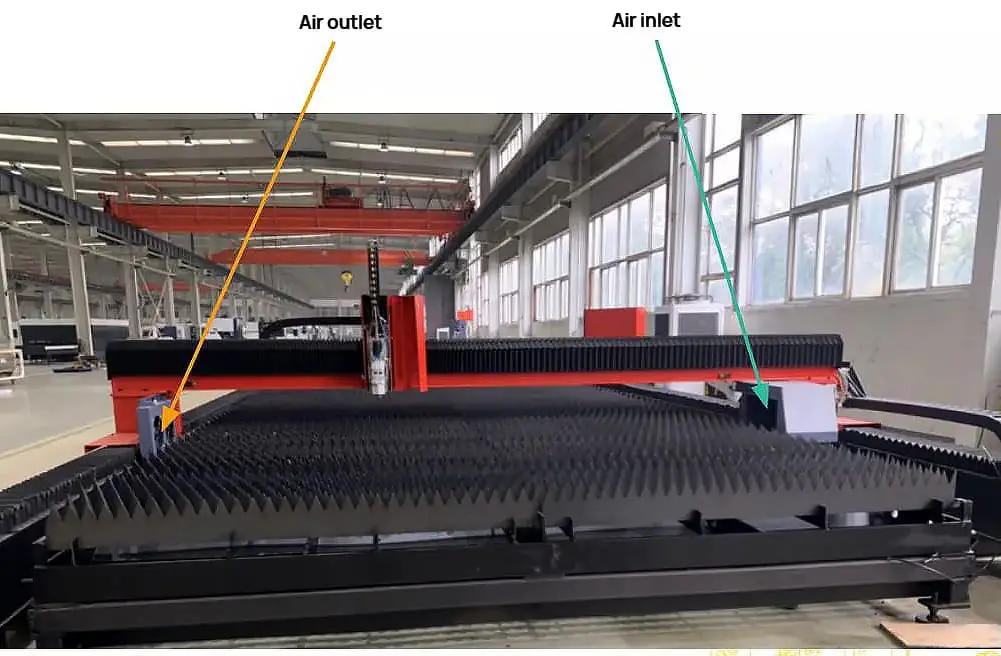
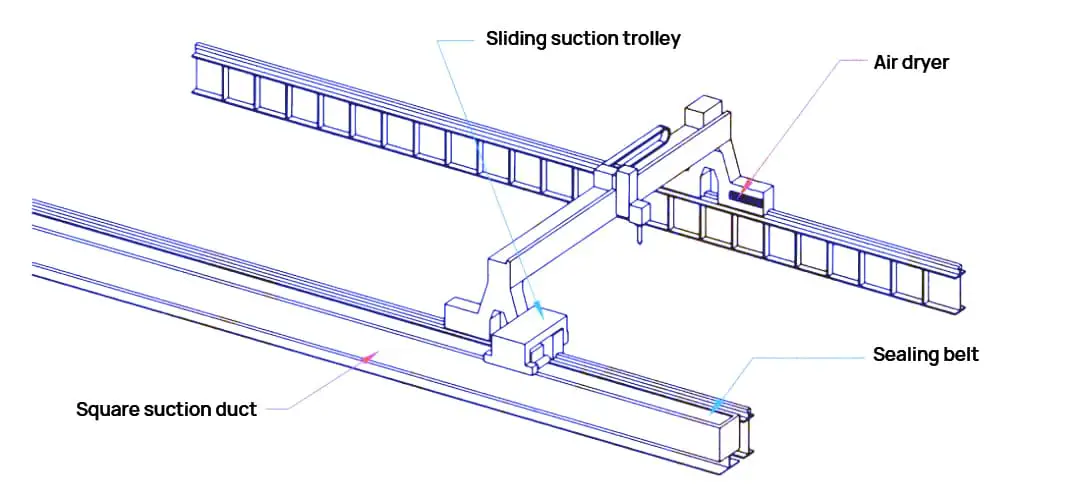
A segmented cutting bed can open extraction zones near the active cutting head while closing unused zones. This can concentrate airflow where fumes are generated, but the valves, ducting and collector must be designed as one compatible system. Some machines also use moving side-collection hoods; suitability depends on the bed and machine arrangement.
Wet tables and water-based collection
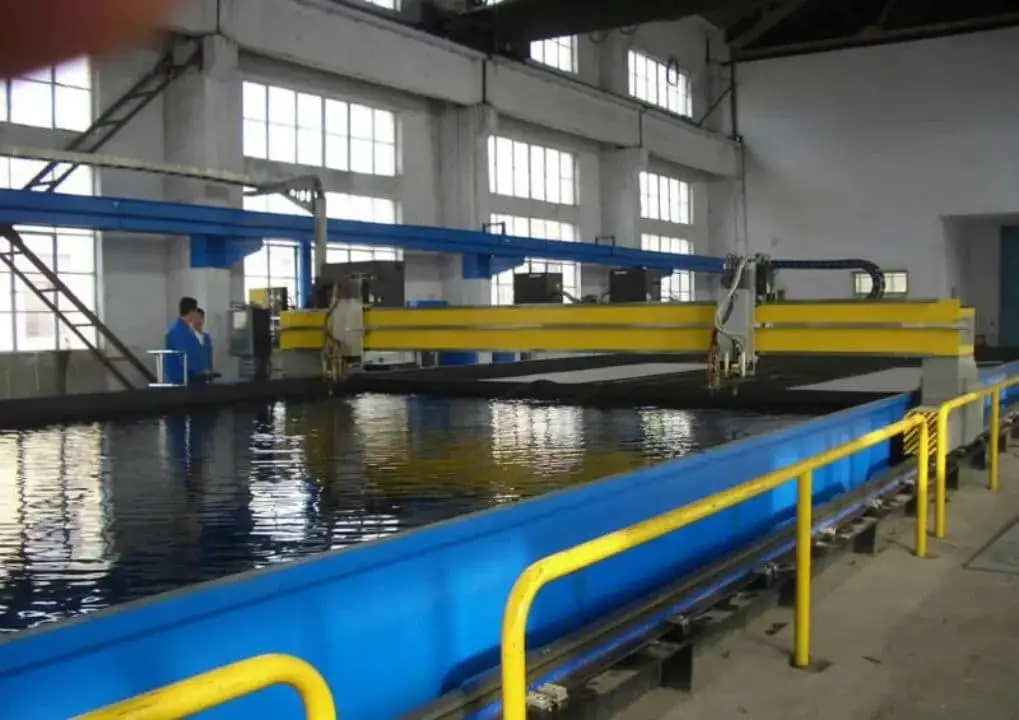
A water table or wet collection design may capture some particles at the cutting area. It creates its own requirements for water level, sludge removal, corrosion control, cleaning and safe electrical integration. A wet table is not automatically a replacement for all engineered extraction or filtration; follow the machine and system supplier’s design.
How to compare the options
Consider the machine width, number of cutting heads, material mix, production duty, installation space, filter service, waste handling, energy use and local emission requirements. Ask the machine and extraction suppliers to confirm airflow, collector capacity, ducting and maintenance needs for the exact configuration.
Inspection and maintenance
Check ducts, extraction openings, valves, filters and collectors on the supplier’s schedule. A blocked filter, leak or poorly sealed connection can reduce capture performance. Handle collected dust and sludge according to the material safety information and local disposal rules; do not use compressed air to disperse settled dust.
Photo suggestion
Use a real workshop photo showing the cutting bed, extraction zones or water table, duct connection and collector model. Do not claim a system is compliant without the required site assessment and documentation.